Booking View
Property booking, web and mobile on one API
One REST API feeding both the web and mobile apps, with Stripe payments, Clerk sessions and push notifications.
- Year
- 2025 – 2026
- Context
- University project, UTA
- Team
- 4 people
- Code
- GitHub
- clients on one API: web and mobile
- 2
- profiles with different permissions
- 4
The system
Property booking with two main profiles: the owner who lists and manages properties, and the guest who searches, books and pays. A single REST API on Node.js, Express and MongoDB feeds the web app (React) and the mobile one (React Native).
Technical decisions
It includes availability checks to prevent overlapping bookings, Stripe payments, sessions with Clerk and push notifications for new bookings and status changes.
What it does
- Four profiles (visitor, customer, owner and admin), each with its own permissions.
- A single REST API on Node.js, Express and MongoDB for the web (React) and the mobile app (React Native with Expo).
- Availability is checked before booking: a property can never have two overlapping bookings.
- Stripe payments, in test mode, and sessions with Clerk.
- Property images on Cloudinary.
- An admin dashboard with booking charts, and push notifications.
One concrete problem
Two bookings, the same night
What must never happen in a booking app is selling the same night twice. Before creating a booking, the API checks that the date range doesn't overlap any existing booking for the property; if it does, it rejects it. The rule lives on the server, not in the UI: web and mobile follow it the same way because they share the same API.
Screenshots
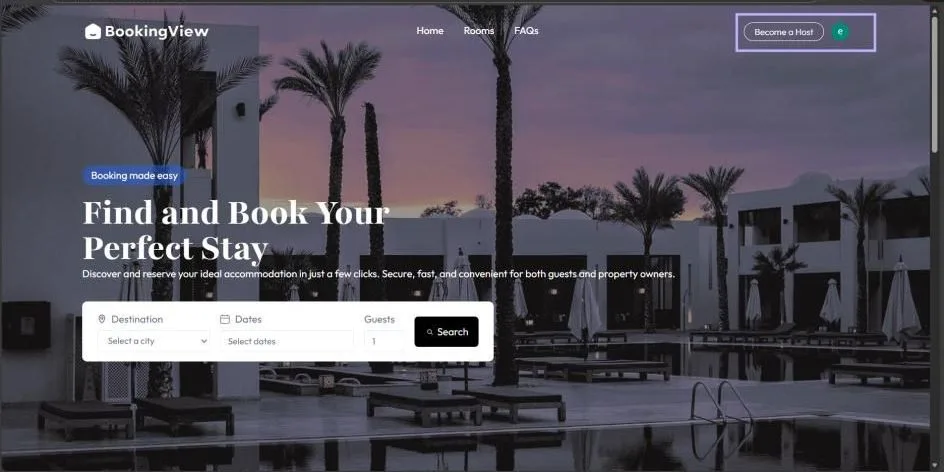
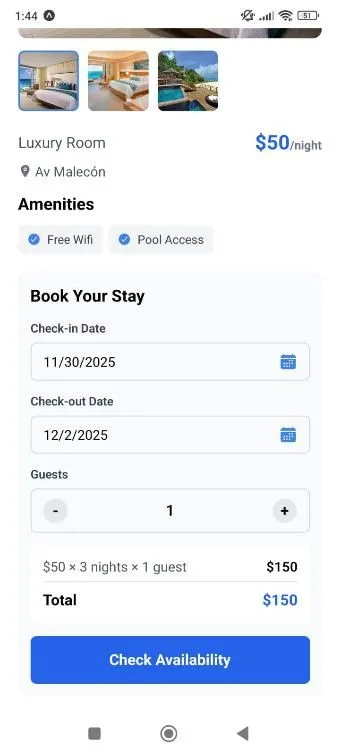
Web home: search by destination and dates. Property page, with gallery and nightly price. Admin dashboard: bookings over time and by property. Mobile app: dates and guests before booking. Mobile app: payment confirmed with Stripe.
My part
The REST API and the React Native mobile app, in a team of four.
Stack
- Node.js
- Express
- MongoDB
- React
- React Native
- Expo
- Stripe
- Clerk
- Cloudinary